
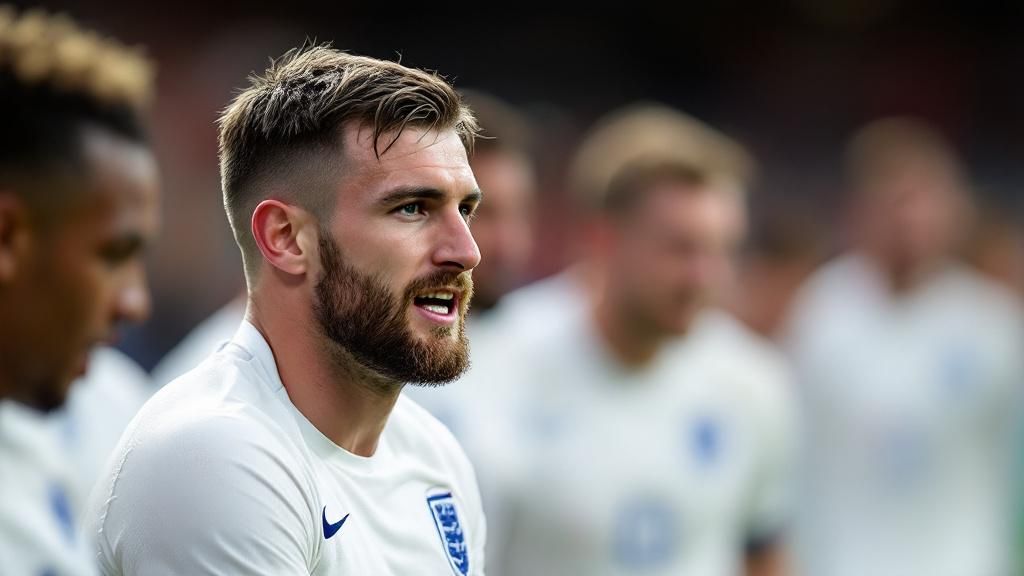
As England’s national soccer side sets its sights on future international tournaments, the Football Association has made player development at the centre of its competitive strategy. Rather than depending exclusively on seasoned players, the Three Lions are committing significant resources to cultivating new prospects and creating a unified team equipped for consistent performance on the world stage. This article examines how focused talent development, strategic evolution, and emerging talent integration are transforming England’s strategy in elite football.
Comprehensive Player Development Framework
The Football Association has created a thorough player training framework intended to spot and cultivate talent throughout all age brackets. This systematic approach includes rigorous talent identification programmes, tailored coaching programmes, and structured progression routes from grassroots football through to elite international competition. By implementing evidence-based training approaches and analytical insights, the FA ensures that emerging talent obtain superior developmental backing. This framework marks a significant shift towards strategic planning, focusing on enduring standards over quick wins and establishing England as a centre for premier player development.
Central to this framework is the coordination of academy systems with national squad demands. Clubs and the national team liaise regularly to ensure young players understand the strategic requirements and conditioning standards of elite international football. Ongoing feedback processes and performance reviews guide players’ advancement, whilst focused coaching from seasoned experts accelerates their development. This integrated environment fosters determination, playing ability, and emotional resilience—qualities crucial for thriving in high-pressure tournament environments. The framework ultimately aims to develop a continuous pipeline of gifted prospects prepared to represent England at the elite standard.
Investment in sports science and healthcare facilities underpins the entire development process. Strength and conditioning specialists, Performance psychologists, and nutritionists partner with coaches to enhance player output and lower injury likelihood. Advanced data analytics assess individual development, pinpointing areas for improvement and informing tailored coaching schedules. This cross-functional model confirms that players grow across all dimensions, addressing physical, technical, tactical, and psychological dimensions of their game. By combining cutting-edge science with traditional coaching wisdom, England makes the most of the capabilities of its emerging talent pool.
The framework also highlights cultural development and leadership qualities together with footballing ability. Young players are supported in developing a sense of responsibility, show resilience when facing challenges, and support squad dynamics. Leadership academies and mentoring programmes foster the principles required to representing England with distinction. This holistic approach acknowledges that success at international level requires far more than technical skill—it demands character, resolve, and a shared commitment to collective achievement. By cultivating these characteristics from an early stage, the FA cultivates players able to cope with the particular challenges of international football.
Youth Inclusion and Talent Pipeline
The Football Association acknowledges that sustained international success requires a robust youth development framework. By integrating promising young players into the senior squad earlier|sooner|at an earlier stage, England aims to build experience and cohesion amongst its emerging talents. This strategic approach ensures a continuous pipeline of quality players ready to compete at the highest level, whilst maintaining competitive depth across all positions.
Amateur to Professional Pathway
England’s grassroots football system creates the foundation of the domestic player development pathway. Support towards academy programmes and junior training hubs has increased substantially, with clubs and the FA collaborating to identify and nurture talented youngsters from an early age. This structured approach ensures that potential stars benefit from world-class coaching and competitive opportunities, readying them for the professional game and potential senior international selection.
The journey from grassroots to elite-level sport has become increasingly sophisticated, employing performance data and ongoing assessment. Scouts and coaches employ cutting-edge assessment tools to recognise talent possessing the technical proficiency, physical attributes, and mental resilience demanded by elite-level competition. This thorough assessment framework ensures that only the most promising talents advance within the system, increasing the probability of long-term elite performance.
- Academy partnerships enhance player discovery and development programmes
- Regular player evaluations monitor progress against elite performance standards
- Competitive junior competitions provide realistic match experience and visibility
- Coaching education programmes guarantee uniform high-quality instruction across the country
- International junior tournaments build experience in demanding competitive environments
Competition Readiness and Performance Objectives
England’s preparation strategy for forthcoming international competitions emphasises a equilibrium between competing priorities between preserving competitive standards and supporting sustained player development. The coaching team have set out performance targets that emphasise not only achieving match victories but also appraising younger players in competitive settings. This methodology allows the Football Association to evaluate how developing squad players perform under pressure whilst preserving competitive performance. By integrating development objectives with current performance objectives, England establishes prospects for talent appraisal without compromising tournament ambitions.
The Three Lions have established thorough performance indicators to measure both individual player progression and collective team development. These goals extend beyond standard win-loss metrics to cover tactical implementation, possession quality, and defensive setup. Managers employ competitive matches as learning opportunities, rotating players methodically to develop experience across the full squad. This deliberate approach ensures that competition serves dual purposes: securing positive outcomes whilst at the same time identifying which emerging talents show the resilience and capacity required for long-term international success at the highest level.
